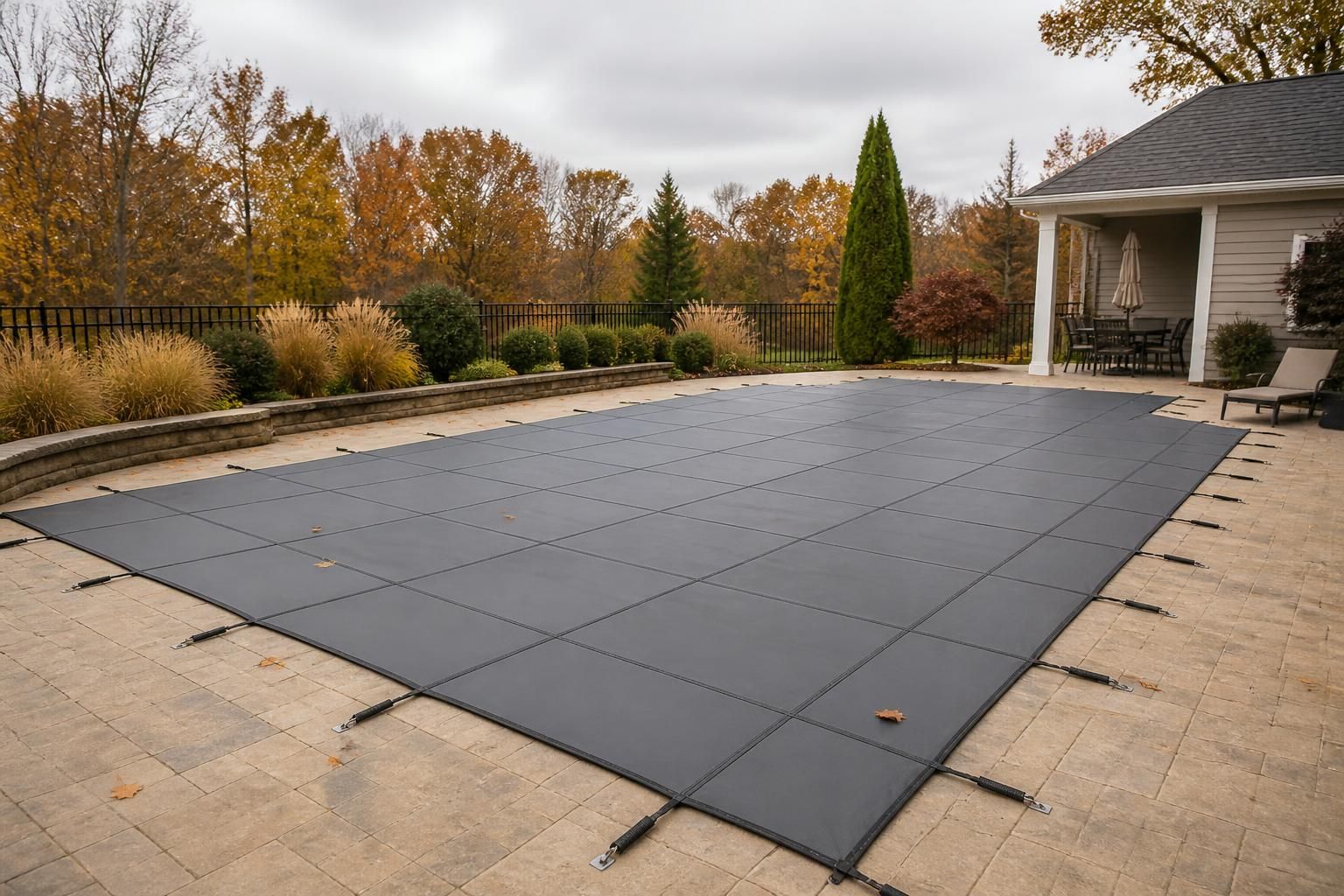
Seasonal Closing
Seasonal closing keeps your Wylie pool protected through cold months and ready for an easier spring reopening.
Seasonal closing from Eclipse Pool Service covers the work of getting a residential pool ready to sit unused through the cold months in Wylie, TX: balancing the water, cleaning out debris, servicing the filter, and preparing the equipment. It is for homeowners who are done swimming for the year, or who want the pool protected before a hard freeze. To get started, call or send a request and tell us about your pool, your equipment, and when you plan to stop using it.
Maybe the leaves are piling up on the cover, the water is turning cloudy, or a cold front is in the forecast and you are not sure what your pool needs before it hits. Walking away from a pool without a plan often means a green, scaly mess in March and a filter full of buildup. A little work now usually saves a lot of scrubbing, chemicals, and guesswork when the weather warms up.
A seasonal closing is a one-time set of tasks that puts the pool into a low-activity state for the off-season. The goal is simple: keep the water from going bad, keep debris from breaking down in the pool, and reduce the chance of cold-weather damage to the pump, filter, and plumbing lines.
The exact list depends on your pool, your equipment layout, and whether you plan to keep the pool covered. We confirm the scope with you before the work starts so you know what is and is not included.
Dirty water going into the off-season is the main cause of stains, algae, and cloudy surprises later. Closing normally includes clearing leaves and other debris, brushing walls and steps, vacuuming the floor, and balancing the water chemistry so it stays stable while the pool is idle.
The filter and pump work hardest all summer and hold the most buildup. Cleaning the filter and checking the pump before they go quiet for the season makes it easier to spot worn parts, and it lets you plan any repair before spring instead of during the first warm weekend.
Homeowners often wonder whether closing means the pool no longer needs attention. It does not. Closing is a single visit that prepares the pool for a quieter stretch. Pool maintenance is the recurring care that keeps water clear week after week, and it is a different service from this one.
In Wylie and the surrounding North Texas area, winters are typically mild compared with northern states, and many pool owners keep some level of care going through the cooler months. Some close the pool fully, and others simply slow things down. This page covers the closing itself. If you want ongoing visits, algae treatment, or a spring restart, ask us and we will explain how those fit with your closing.
Every pool is a little different, but a thorough closing generally follows this order:
Not every pool needs every step, and some homeowners ask for only part of the list. A good provider tells you what they are doing and why.
Most North Texas pool owners think about closing from late fall into early winter, once water temperatures drop and swimming stops. The better guide is your own forecast and habits. If freezing nights are coming, you want the pool prepared before they arrive. If you are still swimming on warm November afternoons, there is no rush.
Texas weather can swing quickly, with a warm week followed by a hard freeze. Scheduling a closing a little early is usually easier than trying to get ahead of a sudden cold snap. Falling leaves also matter. Closing too early and then letting a heavy leaf drop collect on the water can undo some of the work.
Whoever closes your pool, here are standards you can use to judge the work:
Closing prices vary because pools vary. A clear written quote should spell out what you are paying for. The main factors are:
Ask the quote to state the scope of work, the number of visits, what counts as an extra, and how changes will be handled if something unexpected turns up. If a repair is recommended, you should get that as a separate line so you can approve it or wait.
Before hiring anyone to close your pool, put these questions to them:
Tell us about your pool: roughly how big it is, what shape the water is in, what kind of filter and pump you have, and when you would like it closed. We use that to talk through the work and give you a clear picture of what the closing will involve. If you also have a pump that is acting up or a filter that never seems clean, mention it, since closing is a good time to deal with those.
If you are on the fence about closing at all, ask. We can talk through whether a full closing makes sense for your pool or whether a lighter approach fits better for a Wylie winter.
Most homeowners close once swimming has stopped and nights are regularly cool, typically in late fall or early winter. If a hard freeze is in the forecast, it is wise to have the pool prepared beforehand. Call or send a request and we can talk through timing for your pool.
Not always. Winters here are usually milder than in colder states, so some owners keep the pool running at a reduced level. Others close fully, especially if the pool will go unused for months. It depends on your equipment, your cover, and how much you want to do each spring.
Pricing comes from the pool's size, water condition, amount of debris, filter type, equipment layout, and any extras. Your quote should describe the scope and visits clearly, and list any repairs separately.
Algae treatment is one of the services we offer, and it often makes sense to clear the water before closing. Whether that is part of the closing or a separate step depends on how bad the water is, so describe the condition when you call.
The filter is typically cleaned so buildup is not left sitting for months, and the pump is looked over for wear. Anything that needs a repair can be flagged so you can decide on it before spring.
No. Closing is a one-time set of tasks that prepares the pool for the off-season. Regular maintenance is the ongoing care that keeps water clear during swim season. Ask us how the two fit together for your pool.

Tell us what your pool needs, from routine cleaning to a repair, and we’ll follow up with a clear next step.